
Courtesy: Overtime Media
Freedom is often told through a single story, but the University of Trinidad and Tobago (UTT) wants audiences to see a much bigger picture.
On Wednesday, July 29, UTT, in collaboration with the Ministry of Culture and Community Development and the National Academy for the Performing Arts (NAPA), will present “UHURU” at NAPA — a powerful cultural production that explores the shared experiences of African emancipation and Indian indentureship.
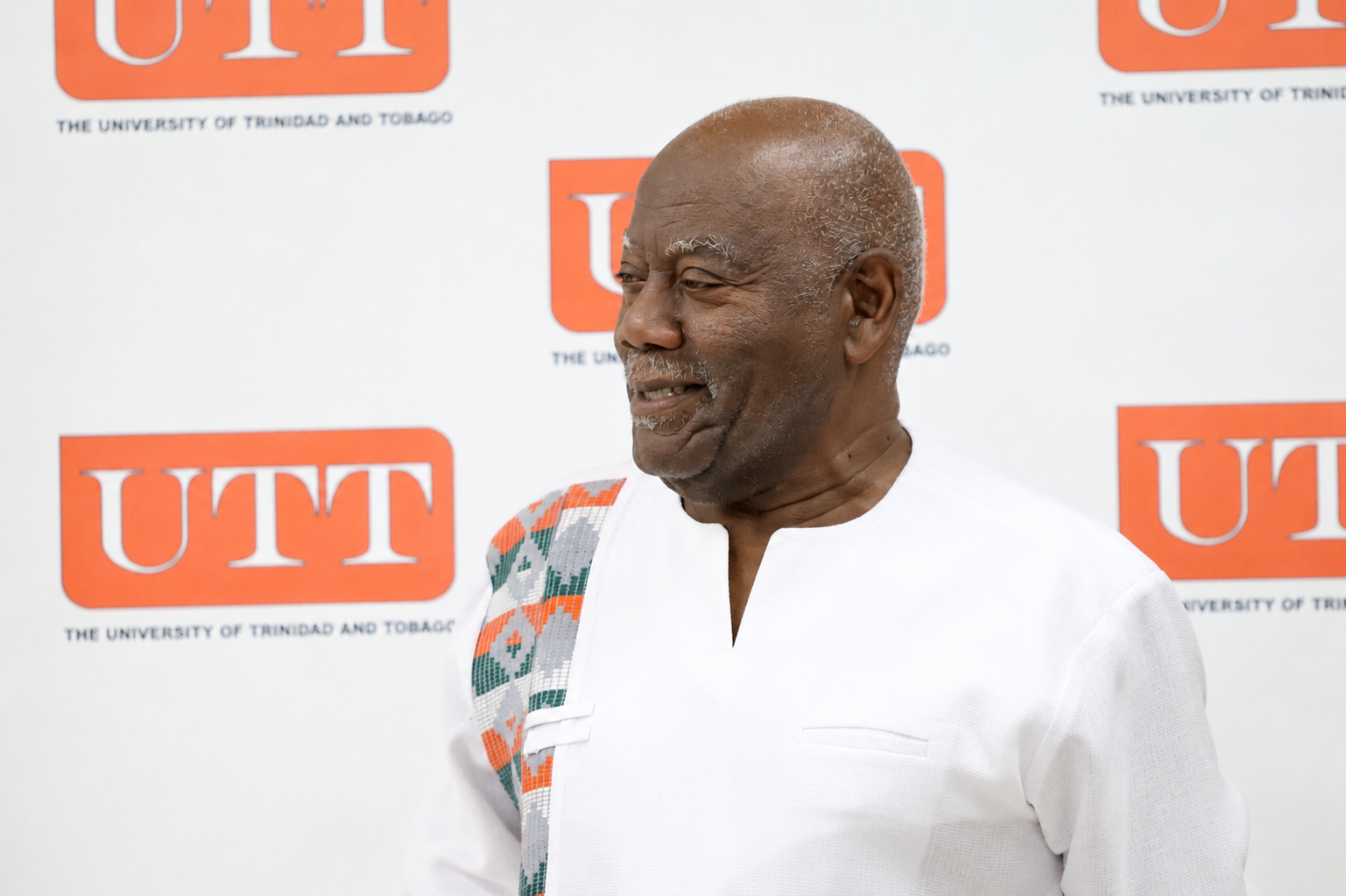
“Uhuru,” the Swahili word for “freedom,” forms the foundation of a programme that UTT Executive Chairman Professor Selwyn Cudjoe O.R.T.T. says is designed to encourage deeper reflection on Trinidad and Tobago’s history and identity.
“What we want to say and we want people to see, at some level, is that our sufferings are common,” Cudjoe explained. “It was during the time of colonialism, yes, and we had differing experiences, but since then we came together and we can recognise and acknowledge that there are certain common sufferings that took place in slavery and indentureship.”
Rather than focusing solely on African Emancipation, Cudjoe said the university wanted to present a broader national conversation.
“Traditionally, when you talk about Emancipation, we just think about black people and black suffering,” he said. “But it’s a university and our student population is diverse, so what we want to do is show that sense of common suffering and, of course, how we have emerged out of it.”

The production is centred around the emancipation speech prepared by Phillip Henry Douglin for the 50th anniversary of Emancipation in 1888. Although intended for delivery on August 1, the address was eventually delivered on August 11. UTT also highlights the remarkable historical coincidence that Douglin was born in 1845 — the same year the first Indian indentured labourers arrived in Trinidad — and died in 1902, just one year after Pan-Africanist Sylvester Williams visited the island.
According to UTT, the production will reflect “the common pain endured by Afro and Indo-Trinbagonians during slavery and indentureship” while celebrating “the harmonious convergence of the legacies of Indian indentureship and African emancipation.”
Bringing that vision to life will be performances by the Shiv Sangeet School of Music, Susan Mohip Dance Troupe, the National Steel Symphony Orchestra, Patrice Ingersbirth, Michael Cherrie, Richard Pierre, Nkosi Waldron, Eddie Cumberbatch and Ayinde Baba Onilu, with Jerome Lewis serving as moderator.
As Trinidad and Tobago observes Emancipation 2026, “UHURU” promises to be more than a cultural showcase. It is an invitation to reflect on the nation’s shared past and consider how different histories of struggle, resilience and hope have helped shape one people and one future.